

Press Release
DOF, DMF and PTTEP join forces to repurpose retired wellhead jackets to boost marine life and fisheries
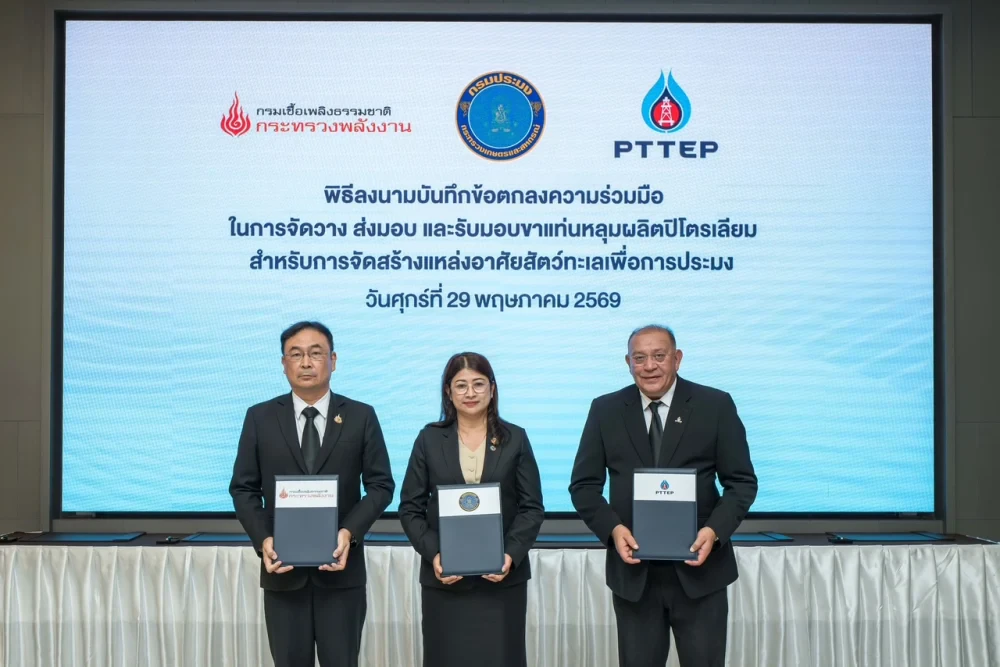
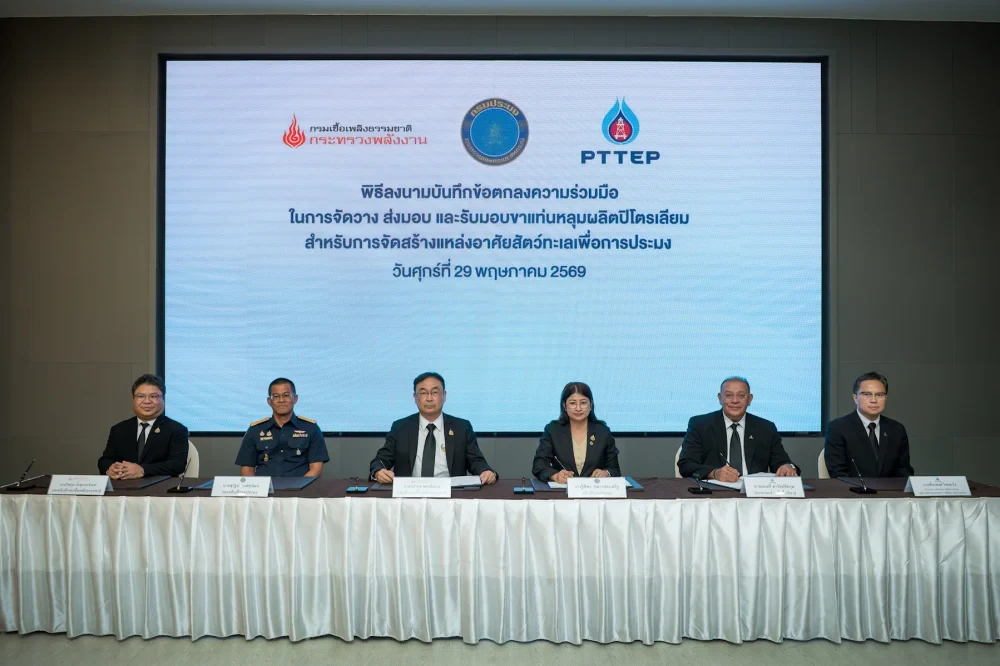

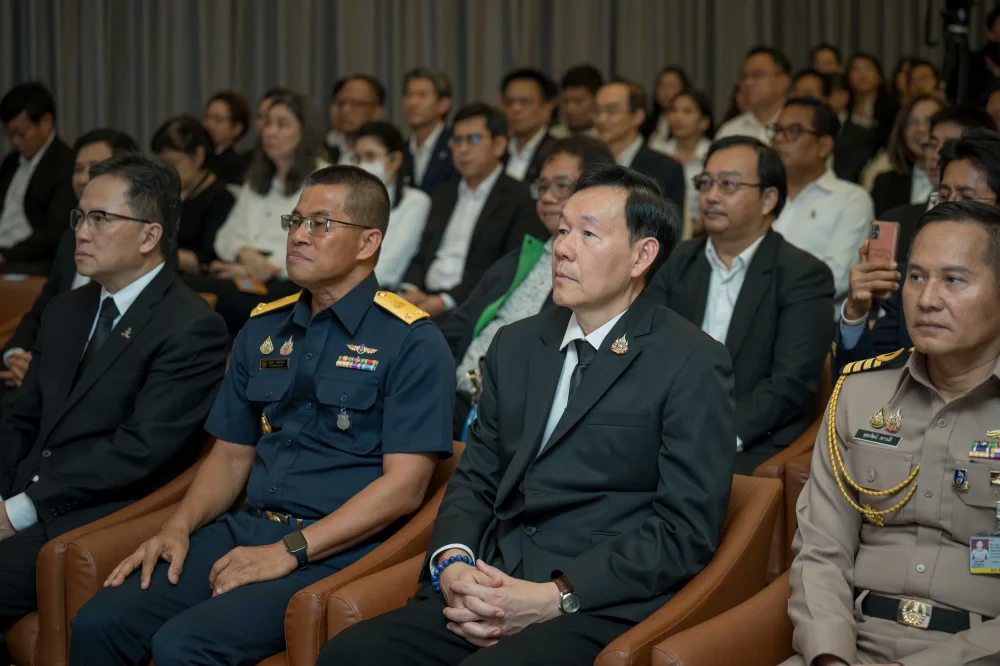
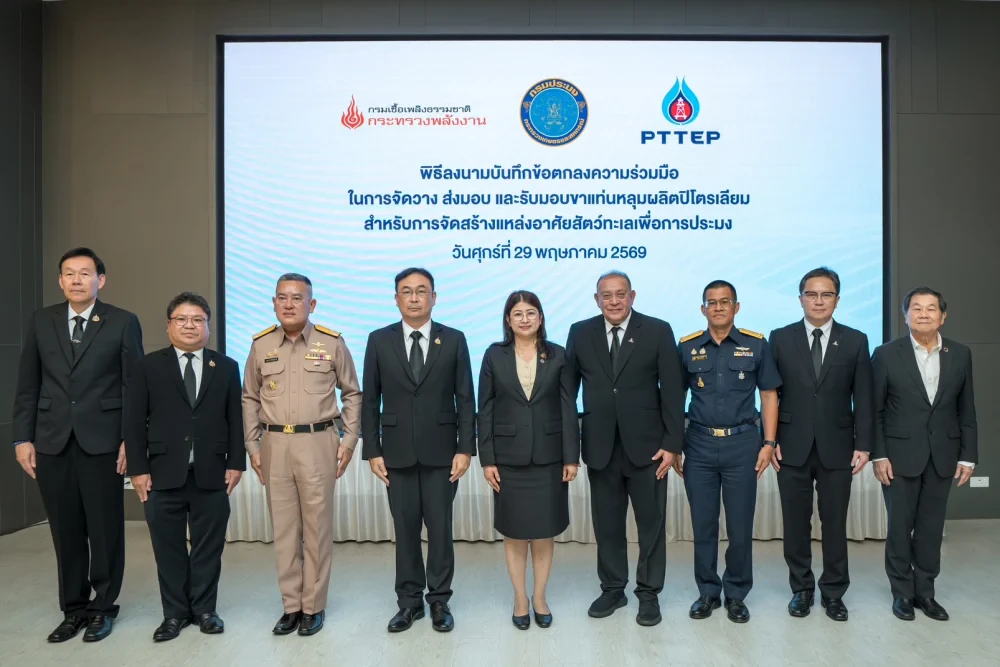
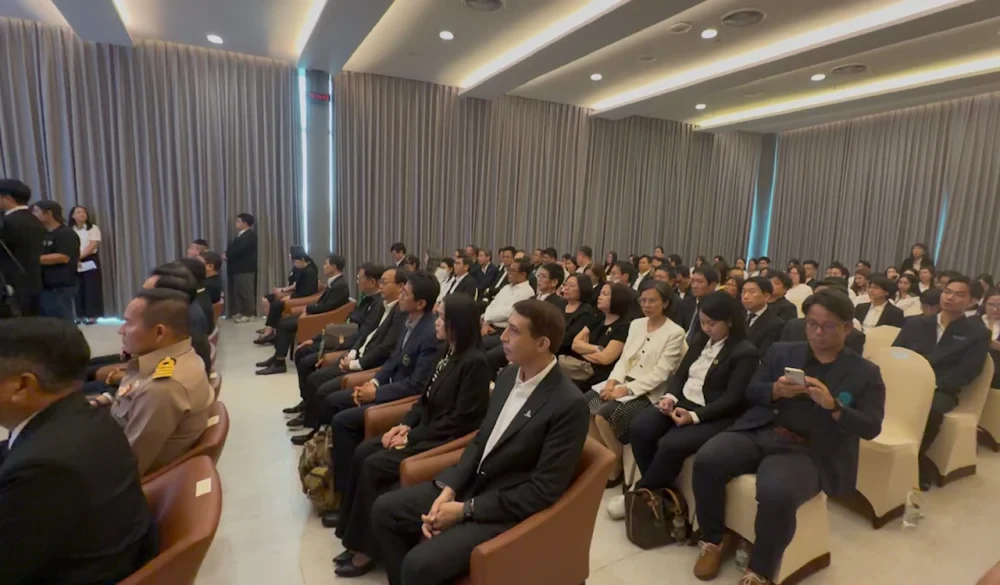
Bangkok – DOF, DMF and PTTEP have partnered to repurpose retired petroleum wellhead platform jackets into artificial reefs, creating habitats for marine life and supporting fisheries. The initiative reflects public–private collaboration in creating value from retired energy infrastructure, contributing to marine biodiversity in the Gulf of Thailand and promoting sustainable fisheries.
Today (May 29, 2026), Mrs. Thitiporn Laoprasert, Director General, the Department of Fisheries (DOF); Mr. Warakorn Brahmopala, Director General, the Department of Mineral Fuels (DMF); and Mr. Montri Rawanchaikul, Chief Executive Officer, PTT Exploration and Production Public Company Limited (PTTEP), jointly signed a Memorandum of Agreement (MOA) on the Placement, Handover and Acceptance of retired jackets from offshore wellhead platforms for use in constructing marine habitats to support fisheries. Under this MOA, PTTEP, with oversight from DMF, will undertake the placement and handover of a total of 9 repurposed jackets to DOF to restore and enhance marine habitats, contributing to greater marine resource abundance. This initiative represents the effective reuse of retired structures from petroleum operations to create added value and maximize benefits for Thailand’s seas and coastal communities. The installation of these structures as artificial reefs is scheduled to commence in the fourth quarter of this year.
This MOA builds on a 2022 joint research initiative by DOF, PTTEP, Kasetsart University, Prince of Songkla University, and the Training Department of the Southeast Asian Fisheries Development Center (SEAFDEC) to study the feasibility of developing marine habitats from retired wellhead platform jackets in the Gulf of Thailand.
In this regard, DMF has provided support to PTTEP in implementing the project, in line with DMF’s mission to oversee the proper decommissioning of unused petroleum facilities. The organization also places importance on maximizing the value of such facilities through beneficial reuse, including repurposing platform jackets for reuse and deploying them as artificial reefs to support the sustainable restoration of marine and fisheries resources.
Retired petroleum wellhead platform jackets are well suited for use as marine habitats due to their strength, durability, and long service life. The structures selected for deployment consist only of components that have not been exposed to liquid petroleum during the production process, ensuring environmental safety. In addition, their surfaces are conducive to the attachment of marine organisms, helping attract fish and providing habitats for marine life.
The project study covered key aspects including site selection, assessment of fisheries resources in the area, marine environmental conditions, structural placement design, and stakeholder engagement and consultations to ensure that the project is implemented appropriately.
PTTEP will support the deployment of the structures as artificial reefs in designated areas of the Gulf of Thailand that have already been approved by relevant authorities, approximately 125 kilometers offshore from Pattani Province, at a depth of around 70 meters. The selected sites have been comprehensively assessed by experts in environmental, ecological, and marine safety aspects. The designated areas have been carefully selected to avoid impacts on major navigation routes and to prevent any disturbance to prevailing ocean currents.
Following installation, continuous monitoring and evaluation will be conducted to generate knowledge for further development of suitable areas for utilizing retired wellhead platform jackets in enhancing marine resource abundance and supporting sustainable fisheries in the long term.
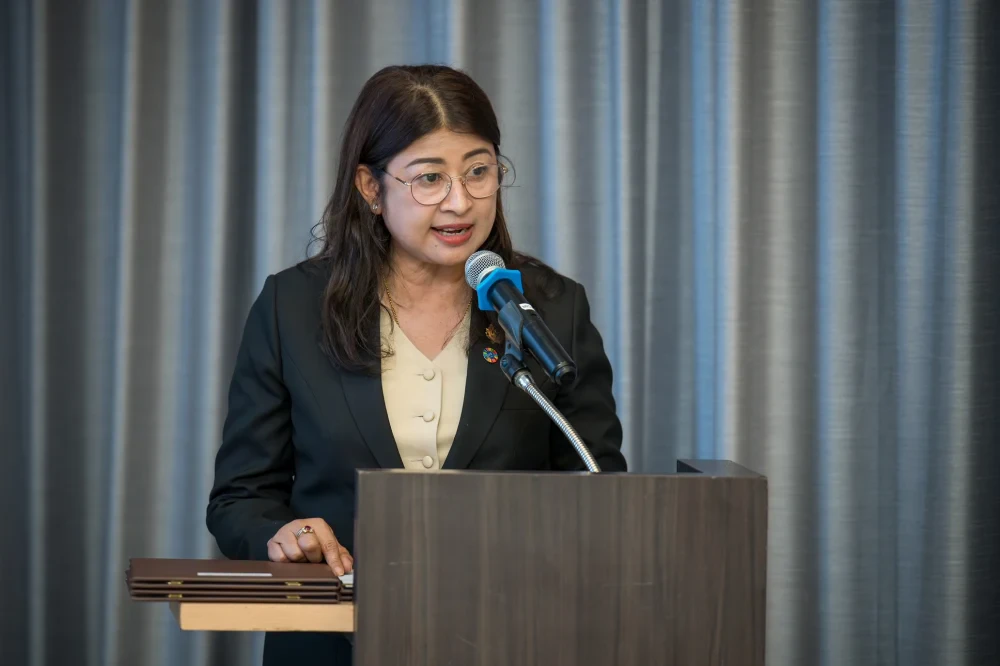
Mrs. Thitiporn Laoprasert, Director General of DOF, said “DOF recognizes the value and benefits of developing marine habitats, or artificial reefs, as shelters for marine life under the Fisheries Connect for Sustainability concept. The initiative aims to strengthen fisheries resource management through integrated collaboration between the public and private sectors to restore and maintain the balance of marine ecosystems. Repurposing retired petroleum wellhead platform jackets into marine habitats represents a new approach to marine resource restoration that can be implemented in a tangible and practical manner. DOF will oversee and inspect the deployment sites following installation, while continuously monitoring and evaluating the project. The deployment of petroleum wellhead platform structures as marine habitats will help enhance the marine ecosystems abundance, expand habitats for marine life, and contribute to the long-term sustainability of the fisheries sector”
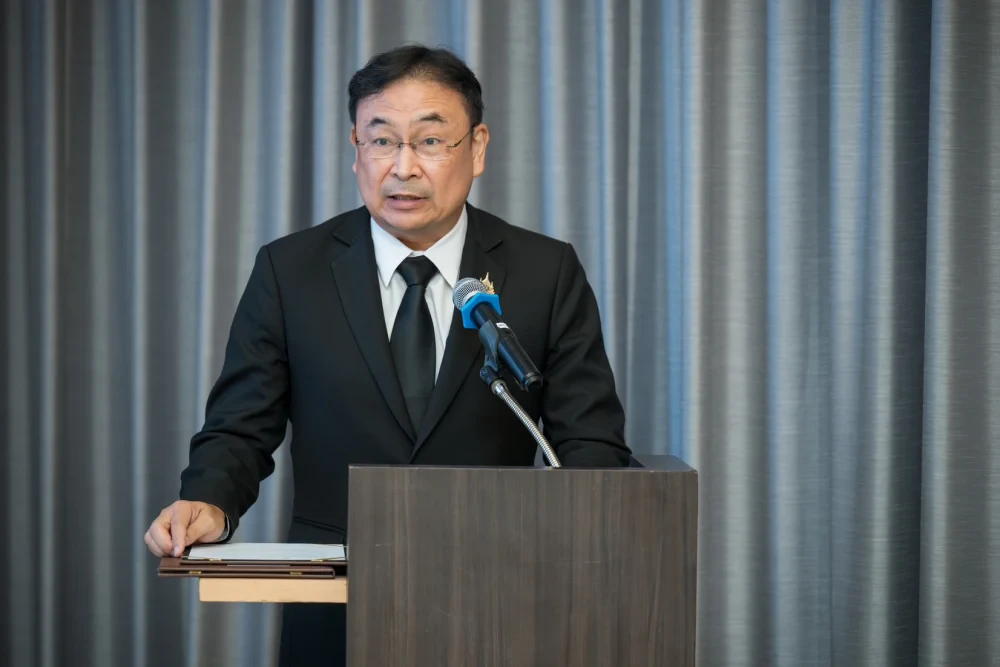
Mr. Warakorn Brahmopala, Director General of DMF, said “DMF is responsible for managing natural fuels to ensure the country’s energy security in an efficient manner, while also placing importance on sustainable environmental management. In maximizing the value of retired petroleum facilities, DMF prioritizes safety and environmental considerations, and stands ready to support and advance the repurpose of decommissioned petroleum wellhead platform jackets into artificial reefs. The initiative aims to create sustainable benefits for the country across energy and environmental dimensions, while also contributing to the development of the fisheries sector in the Gulf of Thailand.”
Mr. Montri Rawanchaikul, Chief Executive Officer of PTTEP said, “PTTEP as the Thai exploration and production company, has carried out our core mission of exploring, developing, and producing petroleum to support the country’s energy security. As exploration and production activities in certain areas come to an end, the associated facilities and equipment have fulfilled their primary purpose. However, these structures still hold strong potential to be repurposed for another valuable role – as artificial reefs for marine habitats. This has led to the initiation of a research project on developing marine habitats from retired petroleum wellhead platform jackets, which is expected to sustainably generate benefits for the Gulf of Thailand and surrounding coastal communities.”
The offshore placement of these structures as marine habitats underscores public–private collaboration in advancing the country’s knowledge of marine resource management in line with the sustainable balance of marine ecosystems. The initiative is also expected to contribute to the development of knowledge and best practices for sustainable fisheries management in Thailand.
For media enquiries, please contact Media Management Section.
The information, statements, forecasts and projections contained herein reflect the Company’s current views with respect to future events and financial performance. These views are based on assumptions subject to various risks. No assurance is given that these future events will occur, or that the Company’s future assumptions are correct. Actual results may differ materially from those projected.